Loading...
Trekking Guide
The Himalayan Altitude Survival Guide
Everything a trekker needs to know about altitude sickness — what causes it, how to prevent it, and exactly what to do if it strikes you on the trail.
By Sea & Sky Tours·June 2025·12 min read
Every year, thousands of trekkers stand at the foot of some of the world's highest mountains with one goal in mind. Some reach the summit. Others turn back, not because of fitness or willpower — but because their bodies simply weren't given enough time to adapt to the thin air. Altitude sickness is the great equaliser: it affects Olympic athletes and sedentary desk workers alike. Understanding it is not optional on a Himalayan trek. It is essential.
What is Altitude Sickness?
Altitude sickness — medically called Acute Mountain Sickness (AMS) — occurs when you ascend faster than your body can adapt to the reduced oxygen levels. At 5,000m (Everest Base Camp altitude), the air contains roughly 50% of the oxygen available at sea level. Your body responds by breathing faster and producing more red blood cells, but this process takes time. Rush it, and fluid can build in the lungs (HAPE) or brain (HACE) — both of which can be fatal within hours.
AMS
Acute Mountain Sickness
Headache + one other symptom. Manageable with rest.
HAPE
High Altitude Pulmonary Edema
Fluid on the lungs. Breathlessness at rest. Medical emergency.
HACE
High Altitude Cerebral Edema
Swelling of the brain. Confusion, stumbling. Life-threatening.
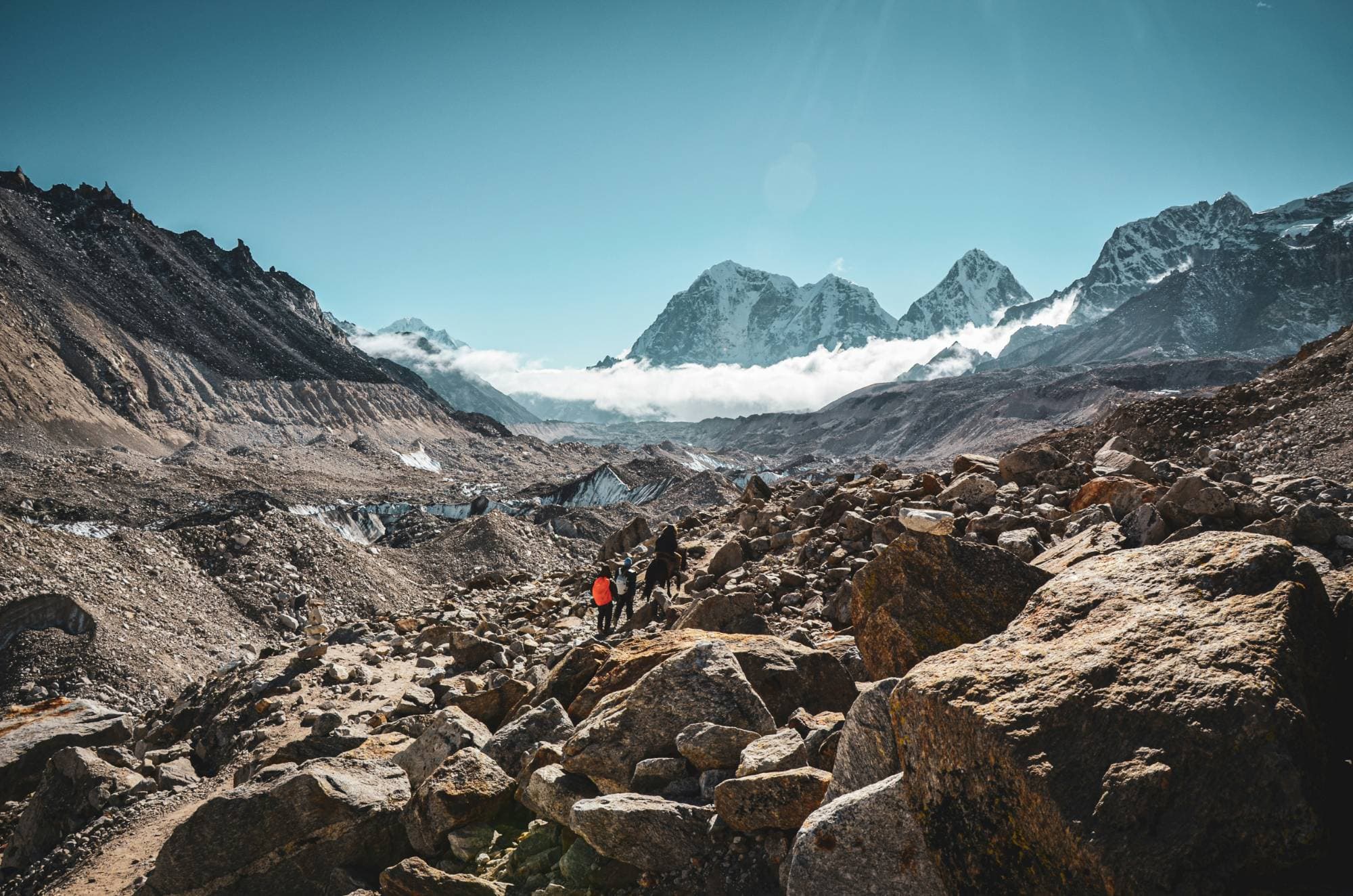
Above 5,000m on the Khumbu — where acclimatisation becomes non-negotiable
The Six Golden Rules
Follow these and your risk of serious altitude illness drops dramatically.
01
"Climb high, sleep low"
You can hike to a higher altitude during the day but always return to a lower camp to sleep. The body acclimatises during rest — use this to your advantage.
02
Never gain more than 300–500m of sleeping altitude per day above 3,000m
Above 3,000m, your sleeping altitude should increase by no more than 300–500m each day. Trek further only after a rest day.
03
Take a rest day every 3rd day
Above 3,000m, rest one full day for every 1,000m gained. Well-designed itineraries (like ours) build in acclimatisation days at Namche Bazaar and Dingboche.
04
Hydrate aggressively — 3 to 4 litres per day
Dehydration accelerates AMS. Drink before you're thirsty. Clear to pale yellow urine = good hydration. Avoid alcohol and sleeping pills — both suppress respiration.
05
Know when to descend — and do it without hesitation
Altitude illness can escalate from mild to fatal within hours. If symptoms are worsening after 24 hours of rest, descend immediately. The mountain will always be there.
06
Consider Diamox (acetazolamide) as a prophylactic
Diamox helps your body acclimatise by stimulating faster breathing. Consult your GP before the trip. Common dose: 125–250mg twice daily, starting 2 days before ascent. Side effects include increased urination and tingling in fingers.
Elevation Profile Explorer
Hover over any point to see the location, altitude, and risk level. Notice how well-planned treks build in acclimatisation days (flat sections) before major altitude gains.
Below 2,500m — Low risk
2,500–3,500m — Moderate
3,500–4,500m — High
Above 4,500m — Very high
AMS Self-Assessment Tool
On the trail right now?Select every symptom you are currently experiencing. This tool uses a simplified Lake Louise Score to assess severity. If any "danger signs" are ticked, do not wait for a score — descend immediately.
Select your current symptoms above to get an assessment.
This tool is for educational purposes only and is not a substitute for professional medical advice. In any doubt, descend.
Your Altitude Medicine Kit
Pack these before you leave Kathmandu — they are harder to source at altitude.
Essential
Ibuprofen / Paracetamol
First-line treatment for AMS headache. 400mg ibuprofen every 8 hours.
Recommended
Diamox (Acetazolamide)
Prescription only. Consult your GP. Helps body acclimatise faster.
Emergency
Dexamethasone
Emergency only. For HACE. Prescribed — carried by guides on our treks.
Emergency
Nifedipine
Emergency HAPE treatment. Prescription required.
Recommended
Pulse Oximeter
Measures blood oxygen saturation (SpO₂). Below 80% at altitude = concern.
Essential
Oral Rehydration Salts
Replenish electrolytes lost through heavy breathing and sweating.
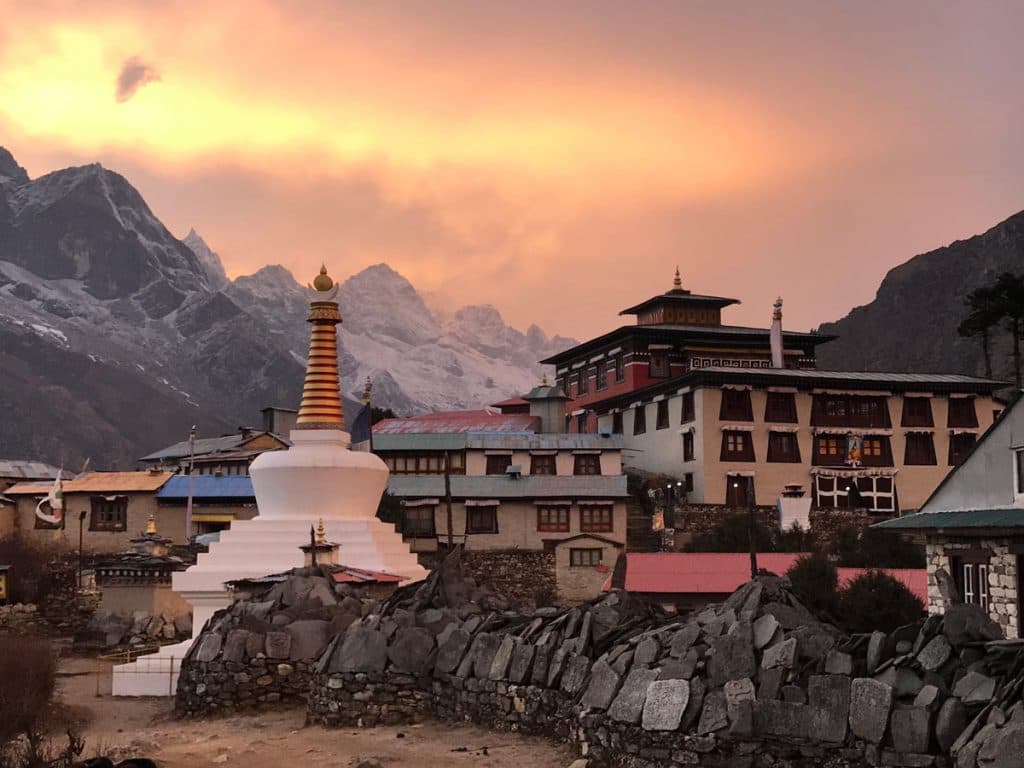
Tengboche (3,867m) — a key acclimatisation point on the EBC route
Reading Your Pulse Oximeter
SpO₂ (blood oxygen saturation) is the key number to watch. Even acclimatised trekkers see lower readings at altitude — this is normal. What matters is the trend and how you feel.
| SpO₂ Reading | What it means | Action |
|---|---|---|
| 95–100% | Normal (sea level baseline) | All good |
| 90–94% | Expected at high altitude | Monitor, rest well |
| 85–89% | Lower than expected | Rest, do not ascend. Reassess in 2 hours. |
| 80–84% | Significant drop | Do not ascend. Consider descending if symptoms present. |
| Below 80% | Critical — possible HAPE/HACE | Descend immediately |
Ready to Trek Safely?
All our guides are wilderness first-aid certified
Every Sea & Sky trekking package includes a certified, experienced guide trained in altitude medicine, oxygen administration, and emergency evacuation coordination.
Explore EBC Trek